


Key takeaways
- Plant protection comparable to chemical disinfection. In the trials carried out in Italy, there was no difference from the chemical reference after several months in cold storage. In France, the treated batches were clean during callusing.
- Fewer trunk disease fungi, from the nursery to the vineyard. Plants treated in the nursery carry significantly fewer of them (up to −96% for Diplodia seriata at the graft union), and the effect lasts at least two years after planting.
- SC1 establishes in the wood and withstands HWT. It colonises the outer layers of the wood, including under the grafting wax, and survives hot water treatment: a German study published in 2025 shows that HWT and SC1 combined eliminate trunk disease pathogens over twelve months.
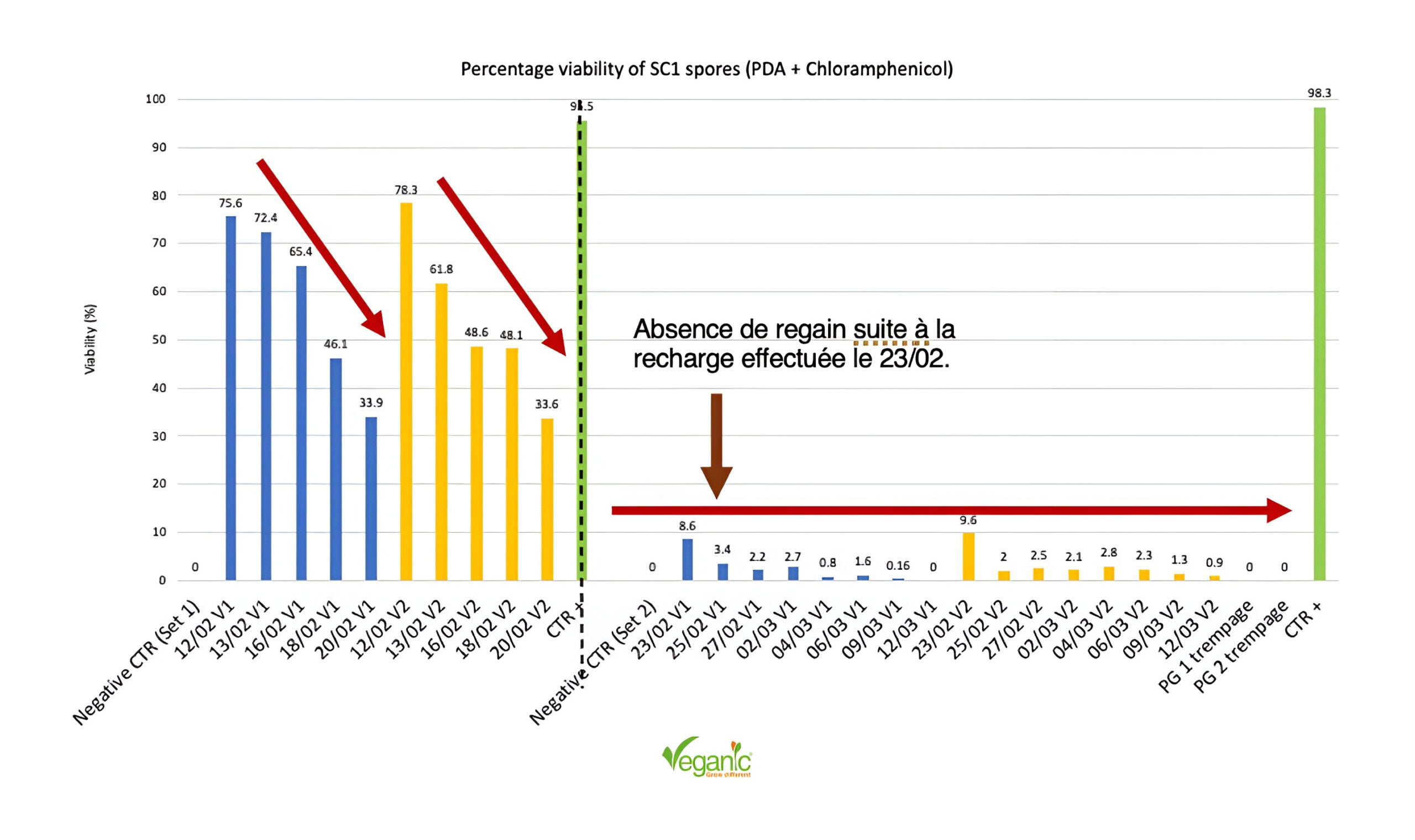
- A suspension to be renewed every 3 days. 1 g/L for dipping, 2 g/L on callusing boxes: beyond 3 days, spore viability drops and topping up is not enough.
Background
Grapevine plant production includes several stages that are vulnerable to fungi: cold storage after lifting, rehydration of scions and rootstocks, and then callusing, when heat and humidity are high. Botrytis (grey mould) and trunk disease fungi are among the main health risks at these stages. Disinfection of plant material currently relies largely on chemical solutions.
For several seasons, together with nurseries and laboratories in Italy, France, Spain and Germany, we have been evaluating a biological alternative: Vintec, formulated with the SC1 strain of Trichoderma atroviride.
The SC1 strain and its mode of action
Trichoderma atroviride is a fungus naturally present in soils. The SC1 strain was selected for its ability to colonise woody tissue. Its action combines several mechanisms: occupation of space and competition for nutrients, mycoparasitism (direct attack on other fungi), production of lytic enzymes and stimulation of the plant’s defences.
Vintec is a low-risk biocontrol product that can be used in organic farming. Its label covers the protection of grapevines (plants, cuttings and established vines) against the fungi associated with esca and black dead arm, against Eutypa lata (Eutypa dieback) and against Botrytis cinerea (grey mould). In the nursery, the authorised use covers the treatment of plants and cuttings against esca and black dead arm; grey mould is authorised on established vines.
Disinfecting grafting material before cold storage: trials in Italy
Two trials were carried out in a nursery producing around 1.2 million grafts per year. Vintec was applied at 1 and 2 g/L, as a fresh suspension or one prepared several days earlier, and compared with the chemical disinfection used by the nursery.
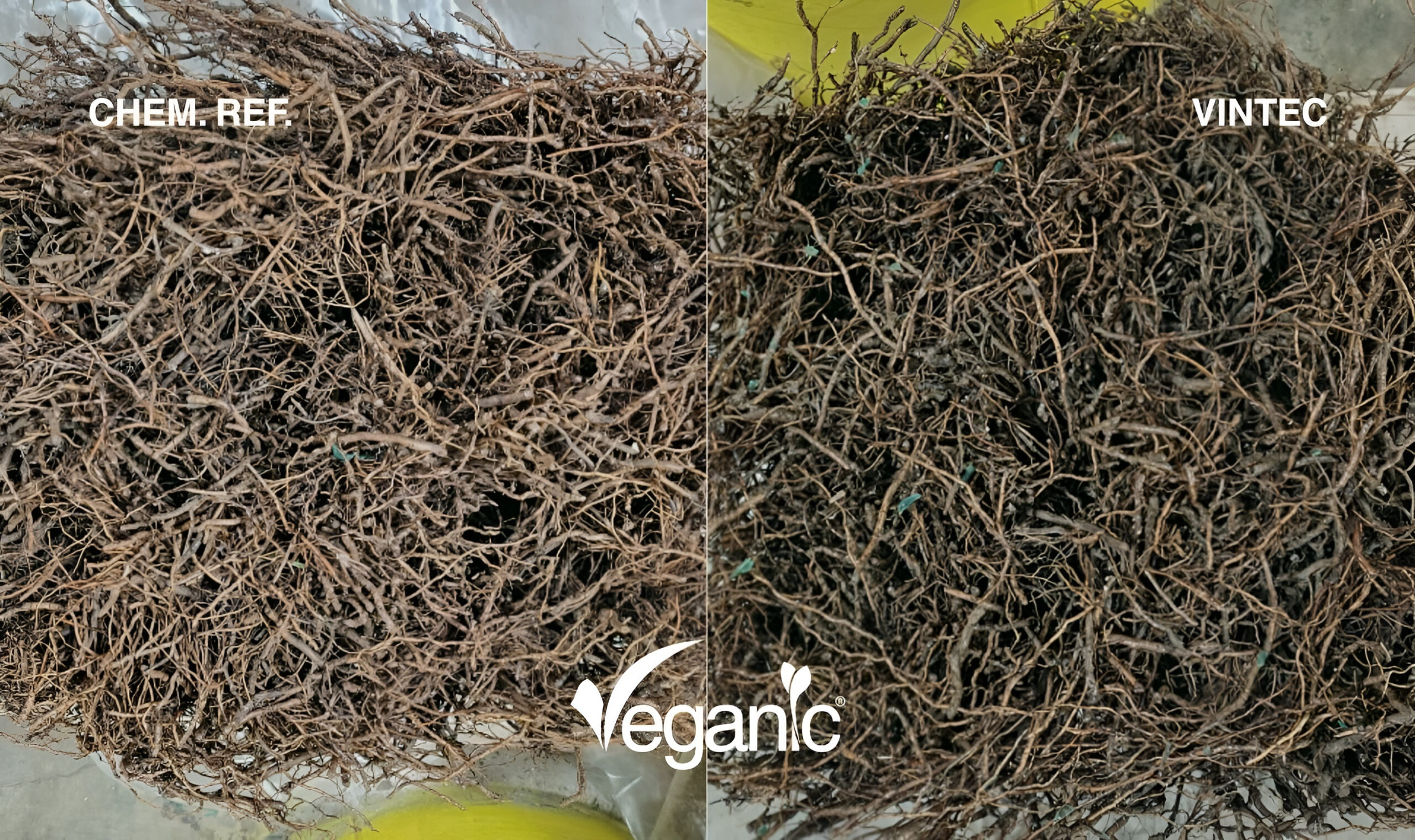
Trial 1 – after lifting. The plants were dipped for 15 minutes and then stored in bags at 1.5–2 °C, with a monthly assessment. After 71 days, traces of mycelium appeared on the roots in two bags out of twelve: one treated with the chemical reference, the other with a 3-day-old Vintec suspension. These symptoms receded at the following assessments and were almost absent after 119 days. No difference was observed between Vintec and the chemical reference.
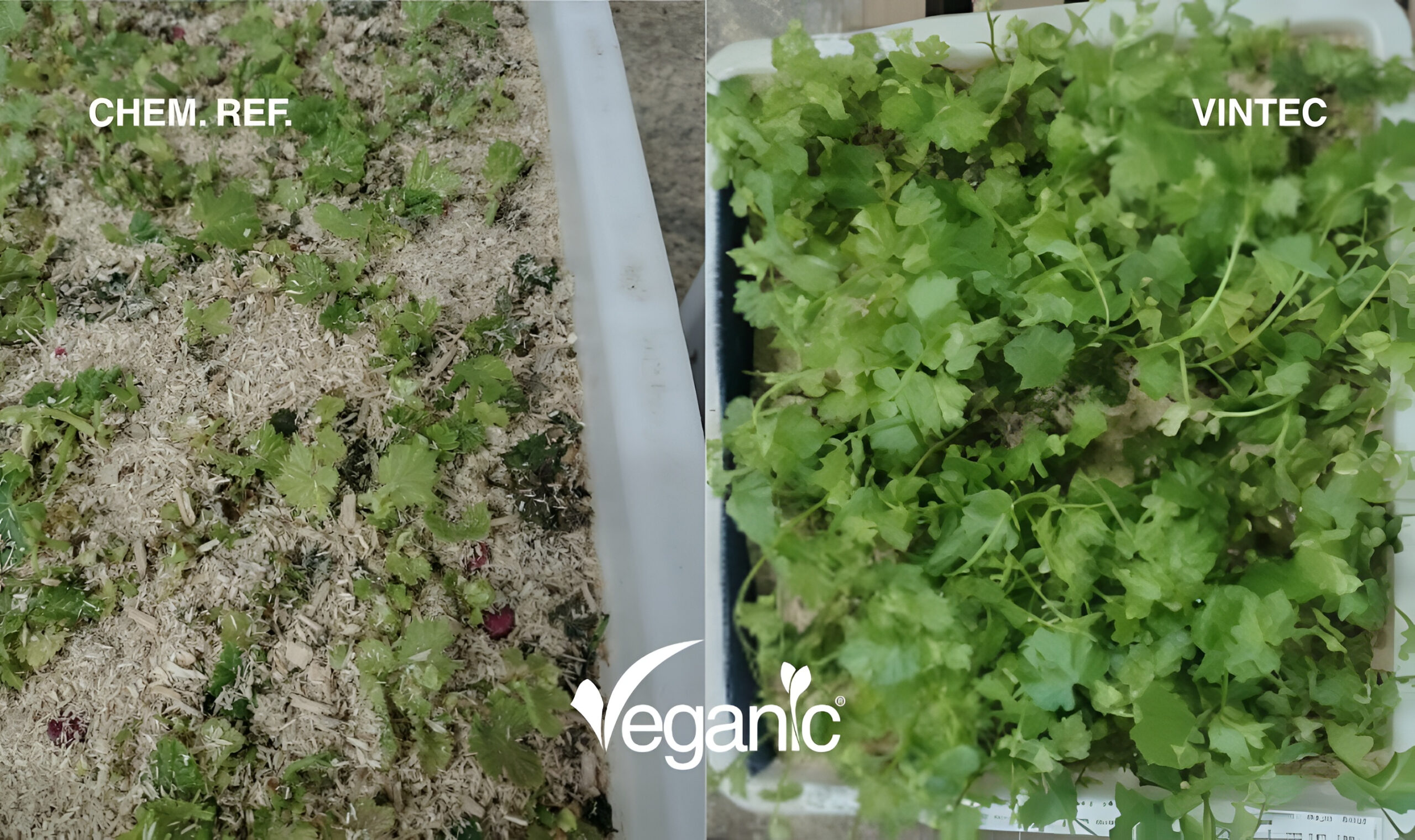
Trial 2 – after rehydration. Scions and rootstocks were dipped for 2 hours before cold storage. After 38 days, all the plant material was healthy, with no difference between treatments. In the forcing room, shoot growth was even and vigorous in all the Vintec treatments, with no fungal symptoms on shoots or leaves.
Trichoderma inside the wood: SC1 found under the grafting wax
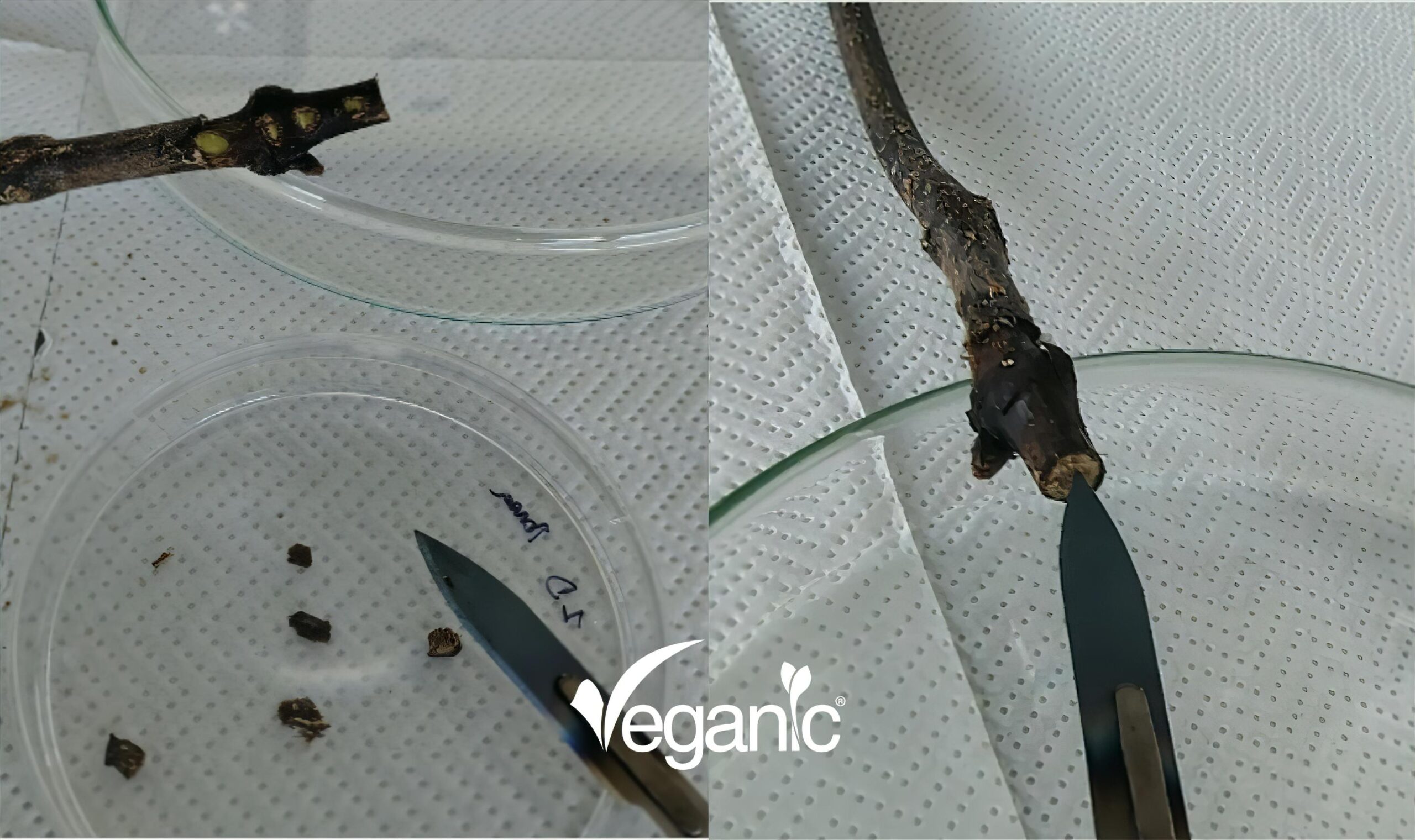
A Tuscan nursery that has been using Vintec for 4 to 5 years at rehydration and callusing provided us with plants for analysis. Wood fragments were taken at different heights and cultured on a semi-selective medium.
SC1 was found at every level of the cane except the pith, including under the grafting wax (up to 1 mm deep).
Disinfection during callusing: trials in France
In France, the trials covered three timings: after lifting, after rehydration and during callusing, with rates from 0.35 to 2 g/L. A first trial could not be completed, as the plants had to be sold during the monitoring period.
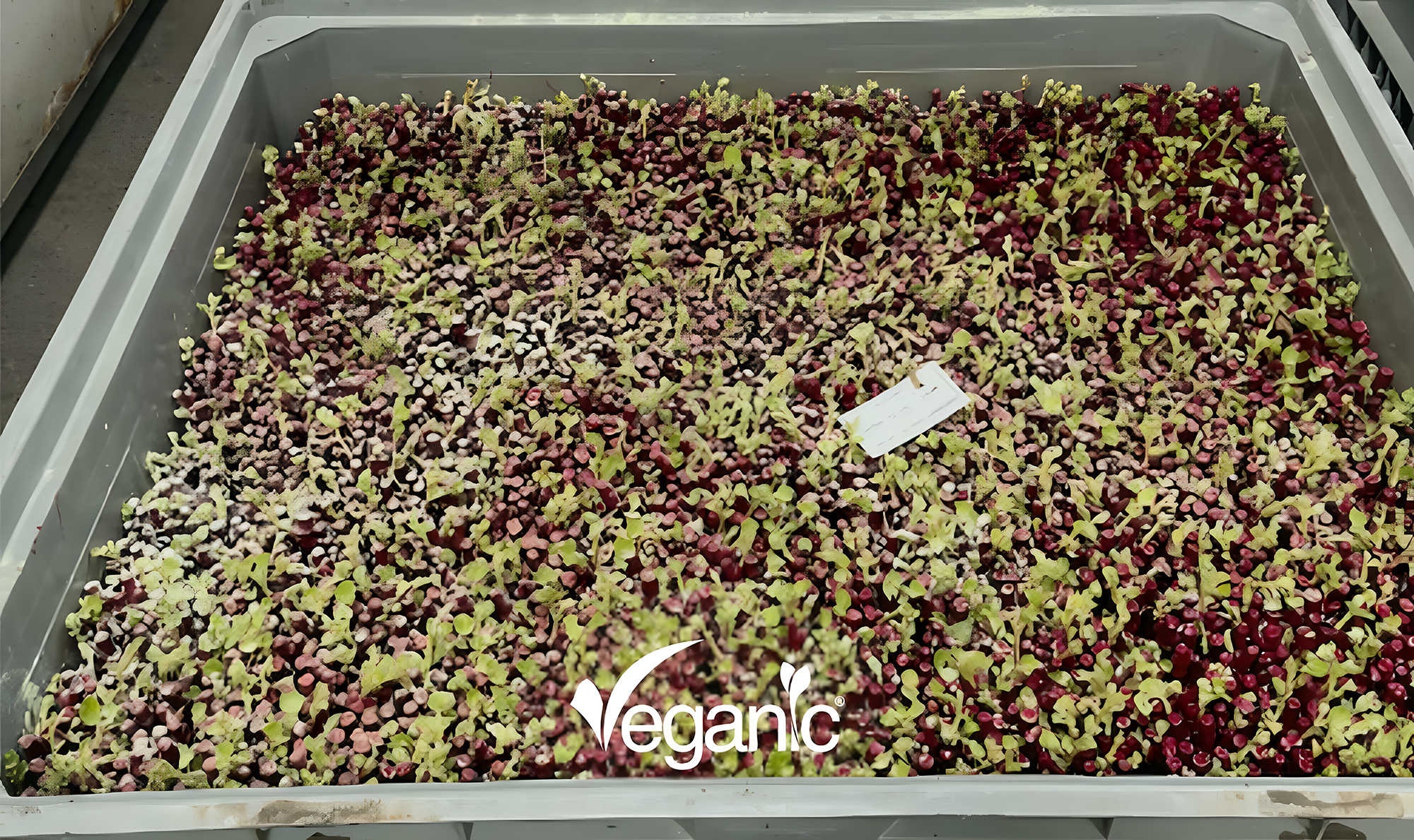
An efficacy gradient in favour of the higher rates for coating, which leads to the recommendation of 1 g/L; clean batches during callusing at the April assessment, including with the treatment of the cover sheets; and good ease of use (homogeneous mix, no deposit in the pallox).
Grapevine trunk diseases in nursery plants: a three-year follow-up in Spain
A trial carried out in Spain followed plants treated with Vintec from the nursery to their third year in the vineyard, on the Tintorera / 110 Richter combination. The fungi analysed are those associated with esca, Petri disease, Botryosphaeria dieback and black foot.
First year, in the nursery. The plants received Vintec at 2 g/L at three points: dipping of the wood before grafting, application to the callusing substrate and dipping of the roots before planting. Three replicates of 120 plants were compared with plants treated with water only. At the end of the season, the presence of trunk disease fungi was analysed at the graft union, at the base of the rootstock and on the roots.
At the graft union, incidence was reduced by 96% for Diplodia seriata, 100% for Neofusicoccum parvum, 77% for Phaeoacremonium minimum and 67% for Phaeomoniella chlamydospora. At the base of the rootstock, Phaeomoniella chlamydospora decreased by 93%.
| Graft union – fungus | Untreated control incidence | Reduction with Vintec |
|---|---|---|
| Diplodia seriata | 26.6% | 96% |
| Neofusicoccum parvum | 6.6% | 100% |
| Phaeoacremonium minimum | 26.6% | 77% |
| Phaeomoniella chlamydospora | 21.3% | 67% |
Second and third years, in the vineyard. The plants were planted on two plots (Requena and Campo Arcís). The reduction in trunk disease fungi was maintained, with drops in incidence mostly between 50 and 100%, depending on the pathogen and the area analysed. Results vary from one plot and one pathogen to another; Phaeoacremonium minimum, in particular, remains harder to control at the base of the rootstock.
These results indicate that treatment from the nursery stage makes it possible to supply plants carrying fewer trunk disease fungi, with an effect that continues after planting.
Compatibility with hot water treatment (HWT)
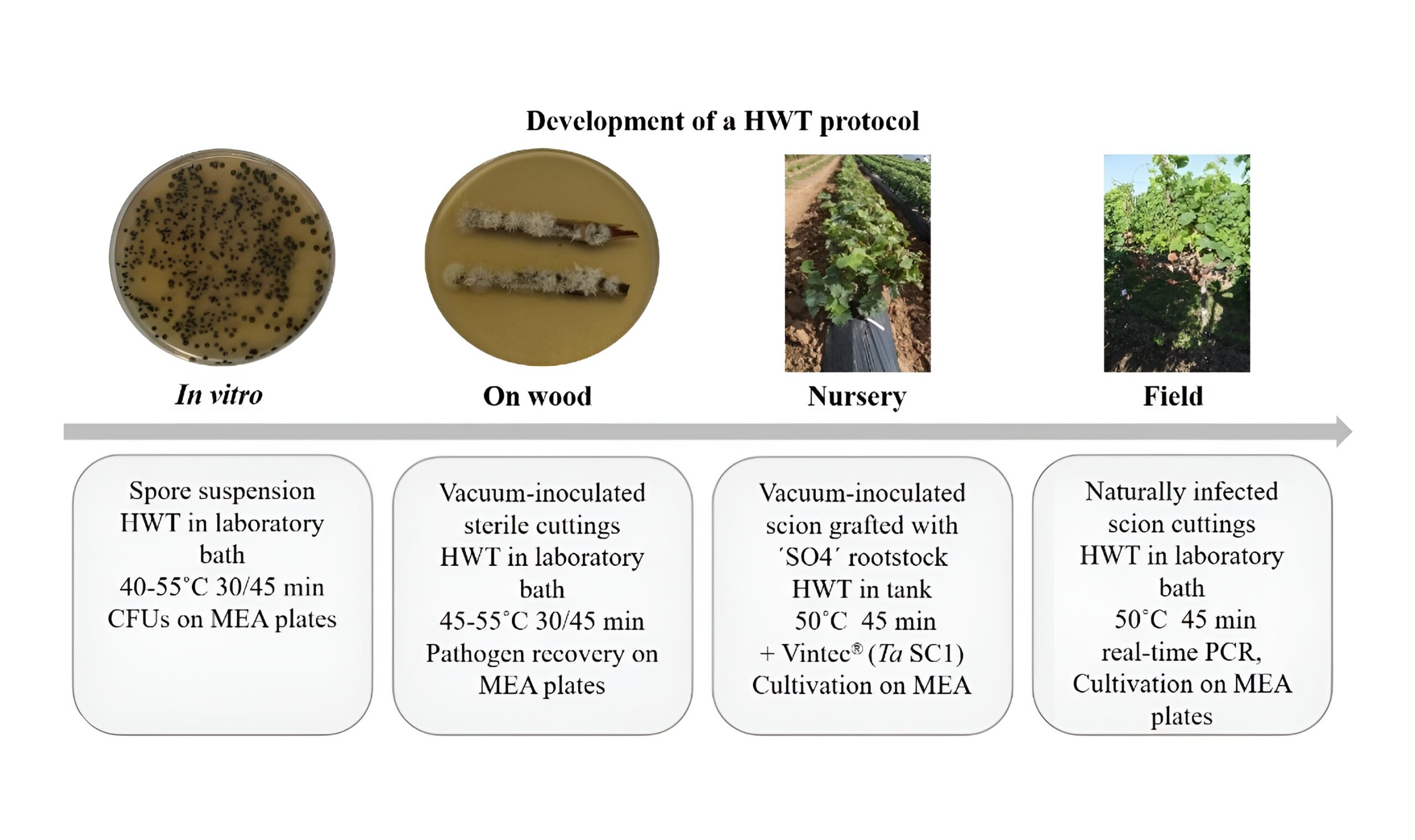
This work was carried out in Germany by the DLR Rheinpfalz viticulture institute, which has its own experimental nursery, together with the University of Göttingen, and published in 2025 in the journal OENO One. Dormant wood received HWT at 50 °C for 45 minutes in a 6,000 L professional tank, followed by inoculation with Trichoderma atroviride SC1 at 2 g/L.
SC1 was recovered from more than 90% of the wood samples after hot water treatment: HWT does not compromise its establishment. Above all, the combination of the two durably eliminated Phaeomoniella chlamydospora, Phaeoacremonium minimum and Diplodia seriata throughout the monitoring period, i.e. twelve months.
The two techniques complement each other: combining hot water treatment and Vintec achieves a higher sanitary quality of the plant material by acting on a broader spectrum of diseases. The possibility of adding Vintec directly to the HWT water is under study.
Source: Simon D. A., Winterhagen P., Walter R., Wetzel T., Kortekamp A., von Tiedemann A., Eder J. (2025). Hot water treatment combined with Trichoderma inoculation in the nursery protects planting material against grapevine trunk disease. OENO One, 59(2). DOI: 10.20870/oeno-one.2025.59.2.8385
Shelf life of the dipping suspension
As Vintec contains a living micro-organism, we monitored the dipping baths in the laboratory: total spore concentration, percentage of viable spores and bacterial contamination.
- The total spore concentration matches the theoretical value (10 million spores/mL at 1 g/L) and remains stable over time.
- Viability, on the other hand, decreases. In the Italian trials, it fell from 92% to 87.5% in 3 days. In a more heavily used French bath, it fell from around 97% at preparation to 76–78% two days later. The determining factor appears to be time rather than the number of plants dipped.
- Adding Vintec to an old bath does not restore viability, probably because of the accumulated contamination.
- Adding copper to the water limits bacterial growth and prevents the bath from going stale.
In practice, it is better to renew the suspension every 3 days than to extend it by topping up.
Recommended conditions of use
| Stage | Rate |
|---|---|
| Dipping / coating of plants, scions and rootstocks | 1 g/L |
| Spraying of callusing boxes | 2 g/L |
| Renewal of the suspension | every 3 days |
Application timings: hydration / rehydration, callusing, after lifting before cold storage. The 1 g/L rate offers the best balance between efficacy, practicality and cost.
Open questions
Direct application of Vintec in the HWT water is under study, as is the spore viability threshold below which protection becomes insufficient.
For any technical questions about these trials, our team is available via the contact form.
Registration No. ES-00468. Use plant protection products safely. Always read the label and product information before use.