

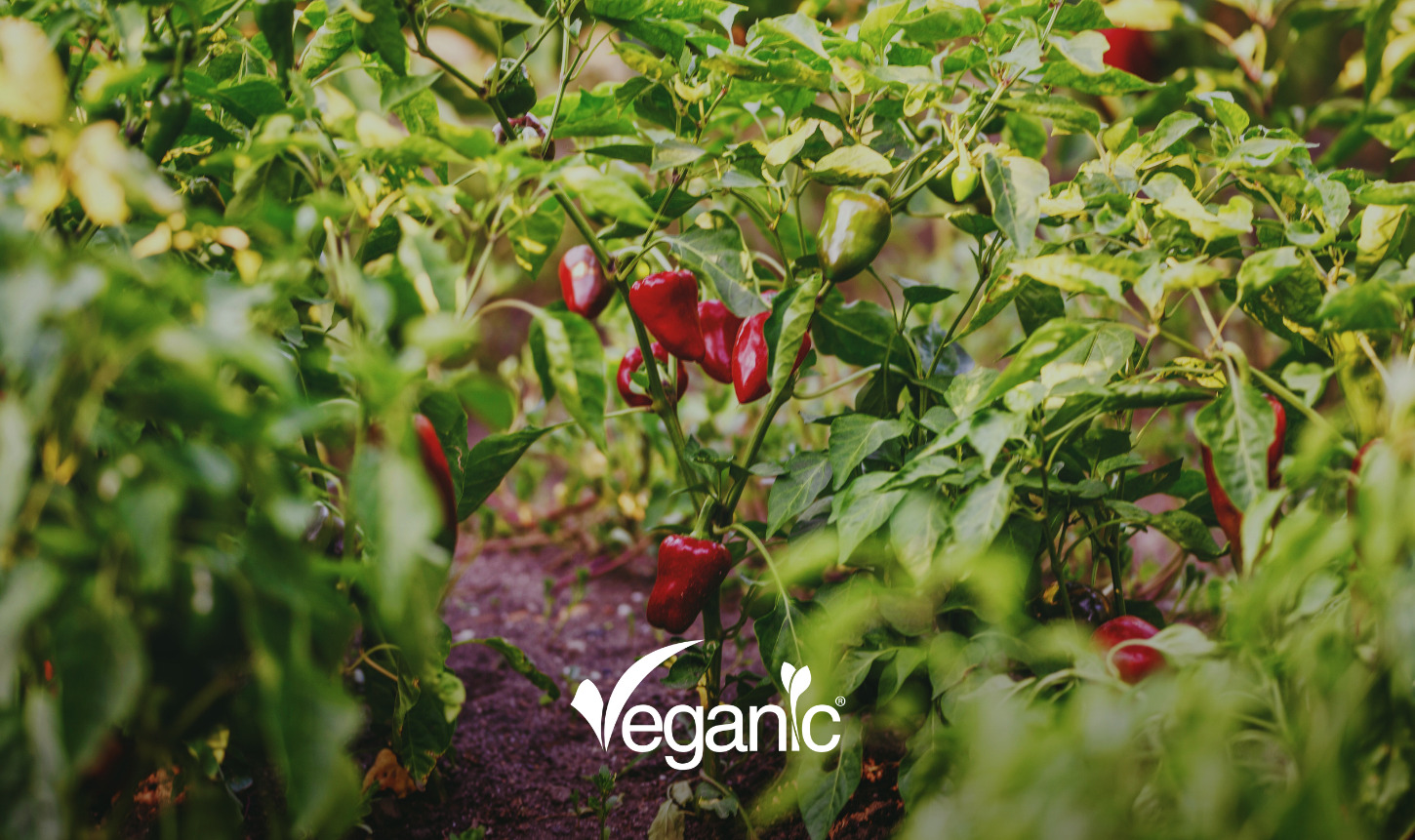
Pepper is one of the most demanding crops a grower can take on. It combines a long production cycle, continuous harvesting over several months, high plant density, a root system that tolerates neither waterlogging nor salinity, and a fresh market that judges the fruit on appearance, uniformity and residue profile at the same time. Each of those characteristics is manageable on its own. Together they produce a crop in which a problem left unattended for two weeks is rarely recoverable.
What follows is a review of the challenges that most often limit pepper production, why they behave the way they do, and where biological and naturally derived solutions genuinely help.
Why Pepper Is a Structurally Difficult Crop
Three features of the crop explain most of its problems.
The cycle is long and simultaneous. In protected production, a pepper crop can remain in the greenhouse for eight months or more, flowering, setting fruit, growing fruit and being harvested at the same time. There is no clean break between phenological stages, which means there is no window in which a treatment can be applied without considering the fruit that will be picked days later. Pre-harvest intervals stop being a formality and become the main constraint on the whole protection programme.
The environment favours the pest. A greenhouse offers stable temperatures, protection from rain and no natural enemies unless they are introduced. Populations of thrips, whitefly and spider mite that would be regulated outdoors reproduce here without interruption, and generation times shorten as temperature rises.
The root system is unforgiving. Pepper roots are shallow relative to the size of the canopy and highly sensitive to oxygen deficit and to salt accumulation. Both conditions are common in intensive greenhouse soils, and both weaken the plant before any symptom is visible above ground.
Pest Pressure: The Vector Problem
Pepper suffers direct damage from several pests, but the decisive issue is usually not the feeding damage.
Thrips (Frankliniella occidentalis) cause scarring and deformation on fruit, which alone can downgrade a batch. Their real importance, however, is as the vector of tomato spotted wilt virus, for which there is no curative treatment. Once the virus is in the crop, management is limited to controlling the vector and removing affected plants — which is why thrips control is judged by population level long before economic damage appears, not after.
Whitefly (Bemisia tabaci, Trialeurodes vaporariorum) feeds on phloem, weakens the plant and produces honeydew on which sooty mould develops, staining the fruit. It also transmits viruses. Its populations build rapidly, it is well protected on the underside of leaves, and resistance to conventional insecticides is widely documented.
Aphids colonise growing points and young leaves, transmit viruses efficiently and reproduce parthenogenetically, which means a single individual can found a colony.
Spider mite (Tetranychus urticae) becomes a problem under hot, dry conditions, particularly at the end of the cycle. It develops resistance quickly and hides beneath webbing that acts as a physical barrier to any contact treatment.
Lepidopteran larvae — Spodoptera, Helicoverpa, Chrysodeixis — bore into fruit. A single larva ruins a fruit that has taken weeks to grow, and damage is discovered only at harvest.
Nematodes, particularly Meloidogyne, deform the roots, restrict water and nutrient uptake and predispose the plant to soil pathogens. Their damage is chronic and easily confused with a nutritional or irrigation problem.
Diseases: Mostly a Soil and Humidity Problem
Phytophthora capsici is the most serious disease of the crop. It attacks the collar and roots, and under waterlogged conditions it kills plants in days. It spreads through irrigation water and survives in the soil, which makes drainage and irrigation management the first line of defence, not the treatment schedule.
Powdery mildew (Leveillula taurica) is characteristic of pepper because it is endoparasitic: it colonises the leaf internally and appears first as yellow blotches on the upper surface, with sporulation on the underside. By the time it is visible it is already established, and severe defoliation exposes fruit to sunscald.
Botrytis cinerea enters through wounds and pruning cuts and through senescent flower tissue, and it develops whenever humidity remains high and the canopy stays wet. In a densely planted crop harvested continuously, wounds are constantly being created.
Bacterial diseases, particularly Xanthomonas spot, spread with splashing water and high humidity and have very limited curative options, which places all the weight on prevention and on plant material.
The Disorders That Are Not Caused by a Pathogen
A significant share of the fruit rejected in pepper is lost to physiological disorders, and treating them as diseases wastes both time and product.
Blossom end rot is a localised calcium deficiency in the distal part of the fruit. It usually appears not because calcium is absent from the soil, but because it did not reach the fruit: calcium moves in the transpiration stream, and any condition that interrupts water flow — heat spikes, salinity, irregular irrigation, root damage — produces the disorder even in well-fertilised crops.
Flower and fruit drop follows temperature extremes during flowering. Above roughly 32–35 °C pollen viability falls, and below about 15 °C fertilisation is impaired. The result is a gap in production that appears three to four weeks after the event that caused it.
Sunscald and cracking relate to sudden exposure of fruit after defoliation and to abrupt changes in water availability.
The common factor is stress. Managing the plant’s capacity to withstand it is not a cosmetic detail; it is a substantial part of the marketable yield.
Where Biosolutions Fit
Biological and naturally derived tools are particularly well suited to this crop for reasons specific to it.
Pre-harvest interval. In a crop harvested twice a week, products with a zero or very short interval are not a preference — they are often the only option available in the productive phase.
Residue profile. Retail specifications for fresh peppers are frequently stricter than the legal maximum residue limits, and a programme built on substances that degrade rapidly reaches those specifications without sacrificing protection.
Compatibility with biological control. Much of modern pepper production relies on released predators and parasitoids. Any product used has to be compatible with them, which excludes a large part of the conventional catalogue.
Resistance management. Multi-target and physical modes of action do not select resistant populations the way single-site molecules do, and rotating them preserves the useful life of the chemistry that remains available.
The condition for all of this is position. Biosolutions work preventively and on early foci, with thorough coverage and repetition on cycle. They are not rescue treatments, and using them as such produces the failures that give the category an undeserved reputation.
From Knowledge to Field Application: Veganic Biosolutions for Pepper Crops
Veganic works across the three fronts described above, with registered tools and naturally derived formulations that fit the harvesting rhythm of a protected pepper crop.
Against sucking pests and mites, Protegea Naturoil® (paraffin oil 83% w/v, EC, registration No. ES-3659) acts physically on aphids, mites, whiteflies and scale insects, coating mobile forms and leaving a film that interferes with egg laying — a mechanical mode of action with no described resistance mechanism. Protegea Insebon® (African oil palm oleins, Elaeis guineensis, 50% w/w) controls whitefly through a physical effect, with a non-phytotoxic profile and good stability in hard water.
Against caterpillars, Protegea Able® (Bacillus thuringiensis subsp. aizawai GC91, 3.8%) offers high efficacy against difficult lepidopterans, even at advanced larval stages, with a low risk of resistance. Against nematodes, Protegea Nemavit® (Tagetes extract 80%, SL) combines nematode management with physiological root support.
Against fungal disease, Pluvigea Bacilo-X® (Bacillus subtilis var. amyloliquefaciens D747) provides preventive and curative control of fungi and bacteria with rapid establishment on the plant; Pluvigea® Mimostar (Mimosa tenuiflora extract) is indicated for soil-borne fungi, foliar rots and diseases such as Botrytis, powdery mildew and anthracnose; and Pluvigea® Pulvium (food-grade sodium hydrogen carbonate, 990 g/kg) controls powdery mildew by contact, with no residues and no pre-harvest interval.
None of these tools resolves a pepper crop on its own, and that is precisely the point. What works in this crop is a programme: monitoring that detects foci early, an environment and an irrigation schedule that do not create the problem, biological control as the base, and naturally derived products positioned where their biology says they are effective.
For safe and effective use, always follow the official product label or consult the Veganic technical team.