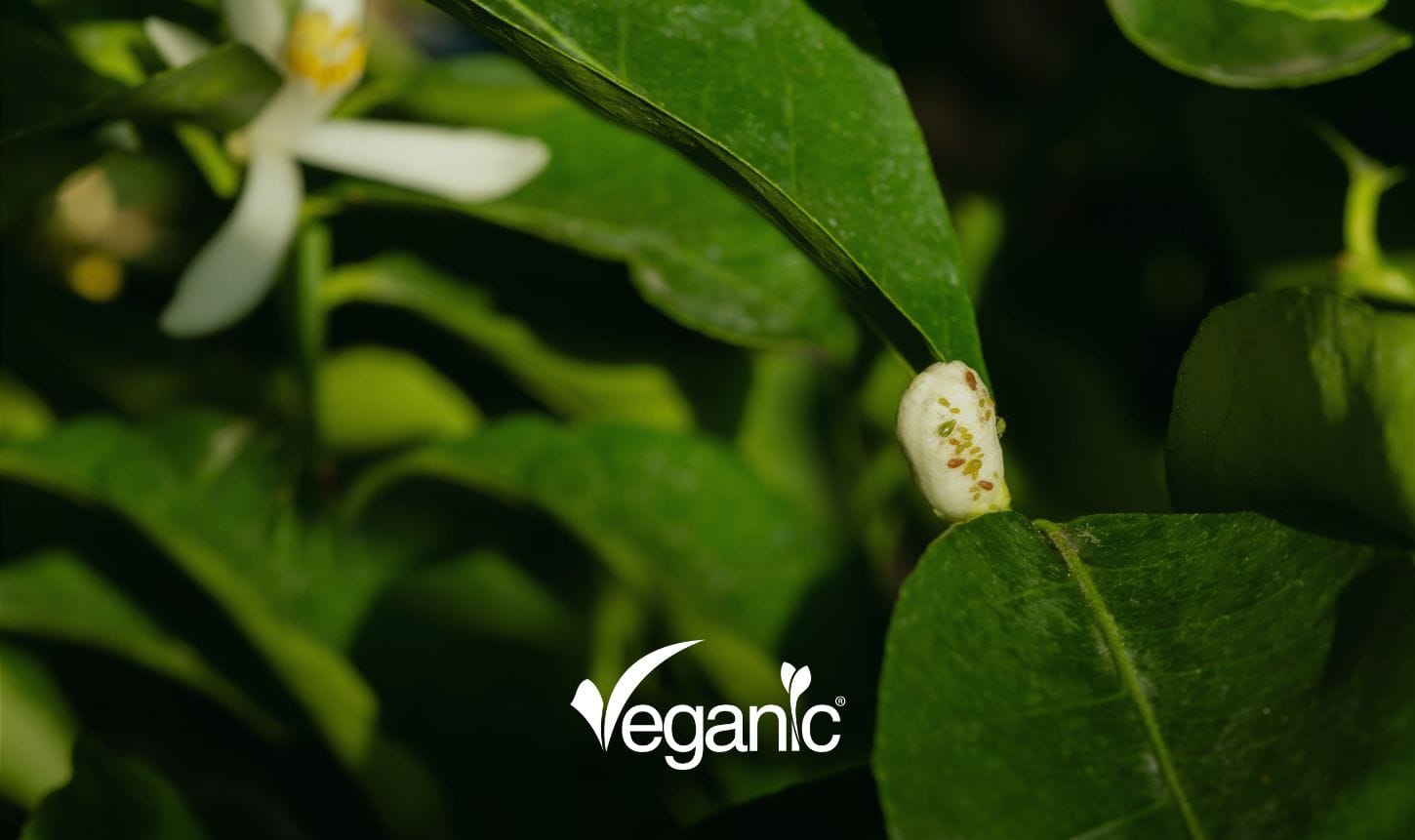



Spider mites are among the few pests capable of taking a crop from apparently healthy to visibly damaged in under three weeks. Their size works against the grower: at 0.4–0.5 mm, a founding population is effectively invisible during routine crop walks, and by the time stippling and webbing are obvious from the row, several overlapping generations are already established. In protected horticulture, vineyards, citrus, strawberries and ornamentals, Tetranychus urticae and related species are a recurring economic problem — one that has become harder to manage as resistance to conventional acaricides has spread and as warmer, drier seasons extend the window in which mites reproduce fastest.
Effective spider mite management is therefore less about finding a product that kills mites and more about seeing the problem early, understanding why it appeared, and combining tools that work in different ways.
What Spider Mites Are and Why They Escalate So Quickly
Spider mites are not insects. They belong to the family Tetranychidae, within the class Arachnida, and this distinction matters in practice: many insecticides have no meaningful activity against them, and some broad-spectrum treatments make infestations worse by removing the predatory mites that were holding the population in check.
The two-spotted spider mite, Tetranychus urticae, is the most widespread species in horticultural systems worldwide, with a host range of over 1,100 plant species. Adults are oval, 0.4–0.5 mm long, and usually pale green to yellowish with two dark lateral spots — the accumulated gut contents visible through a translucent body. Overwintering females frequently turn orange-red, which is the origin of the common Spanish name araña roja.
Their reproductive capacity is what makes them so dangerous. A single female lays between 60 and 100 eggs over her lifetime, and the complete cycle from egg to reproductive adult takes as little as 7–8 days at 30 °C, compared with three to four weeks at 15 °C. Combined with arrhenotokous reproduction — unfertilised eggs produce males, fertilised eggs produce females — this allows populations to multiply several hundredfold within a month under favourable conditions. It also explains why resistance to acaricides develops so rapidly: many generations per season, under repeated selection pressure from products with the same mode of action.
How to Identify Spider Mite Damage Before It Spreads
Spider mites feed by piercing individual leaf cells with their stylets and extracting the contents, and the visible symptoms follow that feeding pattern in a predictable sequence:
- Fine chlorotic stippling. The first sign is a scattering of pale dots on the upper leaf surface, each corresponding to a group of emptied cells. It is best seen with the leaf held against the light.
- Bronzing or silvering. As feeding density increases, the stippled areas merge into a dull bronze, grey or silvery cast, typically starting near the main veins.
- Leaf curling and necrosis. Heavily fed leaves become brittle, curl at the edges and eventually dry out and drop.
- Webbing. Fine silk covering shoot tips and the underside of leaves indicates a well-established population. Webbing is not an early symptom — it means the infestation has been present for some time and the mites are already dispersing.
Because feeding takes place mainly on the underside of leaves, any inspection based on looking at crops from above will detect the problem late. The habit that changes outcomes is simple: turn leaves over, and use a hand lens of at least 10× magnification.
Damage is not only cosmetic. Loss of functional chlorophyll reduces photosynthetic capacity, which translates into smaller fruit size, delayed ripening, lower soluble solids and — in perennial crops — weaker reserves for the following season. In table grapes and citrus, the impact on fruit finish alone can be enough to downgrade a batch commercially.
Conditions That Favour Spider Mite Outbreaks
Spider mite problems are rarely random. They almost always follow a recognisable set of conditions:
Heat and low humidity. Development accelerates sharply above 25 °C, and relative humidity below 50% both speeds up the cycle and reduces the natural mortality of eggs and juveniles. Hot, dry spells are the classic trigger.
Water stress. Drought-stressed plants accumulate soluble nitrogen and amino acids in leaf tissue, improving the nutritional quality of the sap for mites. Irregular irrigation is one of the most consistent predictors of outbreaks.
Excess nitrogen. Lush, nitrogen-rich growth increases fecundity. Nutritional balance is a preventive tool, not just an agronomic one.
Dust on foliage. Dust along field margins and access tracks interferes with predatory mites and creates a favourable microclimate. Outbreaks very often begin on the dusty edges of a plot.
Disruption of natural enemies. Broad-spectrum insecticide and acaricide applications remove predatory mites, Stethorus beetles and predatory bugs. Because pest mites recover faster than their predators, the population frequently rebounds higher than before treatment.
Monitoring: Finding the First Foci
Spider mites do not colonise a plot uniformly. They arrive from the edges, from windbreaks, from weeds or from a neighbouring crop, and they build up in discrete hotspots long before the infestation becomes general. A monitoring protocol that finds those hotspots is worth more than any product.
A workable routine for most horticultural crops:
- Inspect weekly during cool periods and twice weekly once temperatures exceed 25 °C.
- Sample 20–25 leaves per hectare or per greenhouse compartment, taken from the middle third of the plant, where populations concentrate first.
- Give priority to plot edges, dusty tracks, headlands and the warmest, most sheltered areas.
- Record presence or absence per leaf rather than counting individuals. The proportion of occupied leaves is far quicker to obtain and correlates well with population density.
- Mark the hotspots. Georeferencing or simply flagging affected rows allows spot treatment instead of whole-plot application.
Intervention thresholds vary by crop and market. As a general orientation in vegetable crops, action is usually justified when 30–40% of sampled leaves carry mobile forms, or earlier if the crop is at a sensitive stage or the weather forecast is hot and dry. In high-value fruit destined for fresh markets, thresholds are considerably lower because the tolerance for cosmetic damage is minimal.
Prevention and Biological Control
Predatory mites are the backbone of spider mite management in protected crops. Phytoseiulus persimilis is a specialist predator, extremely efficient when spider mite populations are already established and humidity is moderate to high. Neoseiulus californicus is more generalist, tolerates lower humidity and higher temperatures, and persists in the crop at low prey densities, which makes it more suitable for preventive release. Amblyseius swirskii contributes in mixed pest scenarios where whitefly or thrips are also present.
Successful biological control depends on release timing more than on release rate: predators introduced when the pest is in discrete foci will contain the population; the same predators introduced once webbing is general will not.
Cultural measures carry more weight than they are usually given:
- Maintaining even soil moisture and avoiding water stress at critical stages.
- Controlling dust on tracks and field margins.
- Managing weeds that act as reservoirs, particularly Convolvulus, Malva and Solanum species.
- Avoiding excess nitrogen, especially in the pre-harvest period.
- Removing and destroying crop residues at the end of the cycle, before overwintering females migrate to shelter.
Selective products. When intervention is needed, the criterion is not only efficacy against the mite but also compatibility with the predators already working in the crop. Products with contact-only action, short persistence and no vapour phase tend to fit best in an IPM programme.
Bringing the Tools Together in an Integrated Strategy
A functional programme sequences the tools rather than stacking them:
- Before the risk period: cultural prevention, balanced nutrition, stable irrigation and, in protected crops, preventive release of a generalist predator.
- At the first foci: spot treatment of the affected area with a selective product, preserving the predator population in the rest of the plot.
- In active infestation: treatments with complete coverage of the leaf underside, repeated according to the temperature-driven life cycle — every 3 to 7 days in warm conditions, because no single application reaches all life stages.
- Throughout: rotation of modes of action, and re-monitoring after every intervention to confirm that the population is actually falling.
The single most common failure in spider mite control is poor spray coverage. Mites live on the underside of leaves, inside the canopy and often under webbing; an application that wets the upper leaf surface will not reach them regardless of the product used.
From Knowledge to Field Application: Veganic’s Approach to Integrated Mite Management
Veganic develops naturally derived solutions designed to fit into this kind of programme rather than to replace it.
Protegea® Urtix is a bioinsecticide based on Urtica dioica, formulated at 15 g/L of nettle extract as a dispersible concentrate (DC) and approved as a Basic Substance under Article 23 of Regulation (EC) No. 1107/2009. Its plant metabolites — rich in bioflavonoids and tannins — act on early pest stages, which makes it a tool for the initial foci rather than for a general infestation. It carries authorised uses against mites (Tetranychus urticae, T. telarius) in grapevine at 4,500–9,000 g/ha, and against aphids in stone and pome fruit. Its action is progressive: efficacy is assessed several days after application, it depends on thorough coverage of the foliage, and it can be repeated every 3 to 7 days according to pest pressure.
Protegea® Naturoil, based on paraffin oil at 83% w/v (EC, registration No. ES-3659), works purely by contact: it coats mobile forms with a fine film that blocks their respiratory system, and on the plant surface that same film interferes with egg laying, reducing the following generation. It requires complete coverage of both leaf surfaces and appropriate spray solution pH.
Both are residue-conscious tools compatible with organic, integrated and conventional production, and both are designed to be combined with monitoring and biological control — not to substitute them. That is the practical point of integrated mite management: the decision of when and where to apply is worth as much as the product applied.
For safe and effective use, always follow the official product label or consult the Veganic technical team.