

Introduction
Beneficial microorganisms in agriculture have become a key tool within modern farming. As agricultural systems evolve towards more sustainable models, the use of biological solutions for crop protection is gaining prominence over traditional approaches based exclusively on chemical products.
Among the most widely used microorganisms are bacteria of the genus Bacillus and fungi of the genus Trichoderma. Both groups possess biological characteristics that allow them to interact with plants and with other microorganisms present in the soil or on the plant surface. Through these interactions, they can limit the development of pathogens responsible for agricultural diseases.
Today, Bacillus and Trichoderma in agriculture are used in numerous integrated disease management programmes, from horticultural crops and fruit trees to vineyards and arable crops. Their ability to colonise the plant, compete with pathogens and stimulate plant defence mechanisms makes them highly valuable tools for crop protection.
In this article we analyse how Bacillus and Trichoderma work, what mechanisms they use to protect crops and why their use is growing within modern agriculture.
Beneficial microorganisms in agriculture
What are beneficial microorganisms in agriculture
Beneficial microorganisms are microscopic organisms capable of interacting with plants in a positive way. These microorganisms form part of the natural ecosystems of the soil and play fundamental roles in soil fertility, nutrient availability and protection against pathogens.
In traditional agricultural systems, many of these microorganisms are already naturally present. However, in recent years scientific research has made it possible to identify species that are particularly effective at protecting crops against diseases.
Thanks to advances in agricultural microbiology, it is now possible to develop biological products based on these organisms. These products are applied to the soil, to seeds or directly onto the plant to reinforce the crop’s natural defence mechanisms.
Within this group of beneficial microorganisms for plants, two genera stand out for having demonstrated great efficacy across different crops:
- Bacillus
- Trichoderma
Bacillus in agriculture
The role of Bacillus in crop protection
Bacteria of the genus Bacillus are widely distributed in the soil and in the agricultural environment. Some species, such as Bacillus subtilis or Bacillus amyloliquefaciens, have demonstrated a great capacity to act as biological control agents in agriculture against various plant pathogens.
These bacteria can colonise the surface of the root or other plant tissues. Once established, they form microbial communities that occupy space and consume resources that could otherwise be used by pathogens.
Bacillus subtilis as an agricultural biofungicide
One of the most interesting aspects of using Bacillus subtilis in agriculture is its ability to produce antimicrobial substances known as secondary metabolites.
These compounds can:
- Inhibit the growth of fungal pathogens
- Reduce spore germination
- Limit the establishment of diseases in the crop
Another important characteristic of these bacteria is their ability to form resistant spores. This property allows them to survive in adverse environmental conditions and maintain their efficacy when used in microbiological biofungicides.
Trichoderma in agriculture
Trichoderma as a beneficial soil fungus
The genus Trichoderma is made up of fungi that naturally inhabit the soil. These organisms have been widely studied for their ability to interact with other fungi and with plant roots.
Trichoderma in agriculture is used primarily as a soil biocontrol agent, as it can colonise the rhizosphere — the zone of soil surrounding the roots. In this environment it establishes beneficial relationships with the plant and can limit the development of soil-borne pathogens.
Mechanisms of Trichoderma against pathogens
One of the best-known mechanisms of Trichoderma is mycoparasitism. This means the fungus is capable of directly attacking other pathogenic fungi, degrading their cellular structures.
In addition, Trichoderma produces enzymes and antifungal compounds that can inhibit the growth of pathogens responsible for diseases in numerous crops. Thanks to these mechanisms, it has become one of the most widely used microorganisms in biological disease control strategies in agriculture.
How Bacillus and Trichoderma work in crops
Mechanisms of action of beneficial microorganisms
Beneficial microorganisms used in agriculture can act through different mechanisms that contribute to protecting the crop against diseases. Among the most important are:
- Competition for space and nutrients
- Production of antifungal metabolites
- Colonisation of roots and plant tissues
- Activation of the plant’s natural defences
Competition for space and nutrients
When Bacillus or Trichoderma colonise the plant surface or soil, they occupy ecological niches that could otherwise be used by pathogens. This competition reduces the availability of resources for harmful organisms and makes it harder for them to establish themselves in the crop.
Production of antifungal metabolites
Both Bacillus and Trichoderma can produce bioactive compounds that inhibit the growth of fungal pathogens. These metabolites act as a biological barrier and help limit the progression of diseases in different crops.
Colonisation of roots and plant tissues
The ability to colonise roots, seeds or leaf surfaces allows these microorganisms to establish themselves before pathogens do. This early colonisation is one of the keys to biological control, as it reduces the possibility of infection.
Activation of the plant’s natural defences
Some beneficial microorganisms stimulate induced resistance in the plant. This means the crop activates its own defence mechanisms and responds more effectively to the presence of fungi and other pathogenic agents.
Application of Bacillus and Trichoderma in integrated management
Use of microorganisms in integrated disease management programmes
The use of Bacillus and Trichoderma in agriculture is typically integrated within integrated disease management programmes. This approach combines different strategies:
- Agronomic practices
- Biological solutions
- Monitoring tools
- Plant protection treatments when necessary
Beneficial microorganisms can be applied at different stages of the crop cycle:
- Seed treatment
- Soil applications
- Foliar applications
- Incorporation into preventive programmes
Integrating microbiological solutions with appropriate agronomic practices helps reduce pathogen pressure and improve the resilience of the agricultural system.
Microbiological biofungicides in agriculture
Development of microorganism-based biofungicides
Research in applied agricultural microbiology has made it possible to identify numerous microorganisms with potential for protecting crops against diseases. From these discoveries, products known as microbiological biofungicides have been developed. These products contain:
- Live microorganisms
- Metabolites produced by microorganisms
- Formulations that facilitate their establishment in the crop
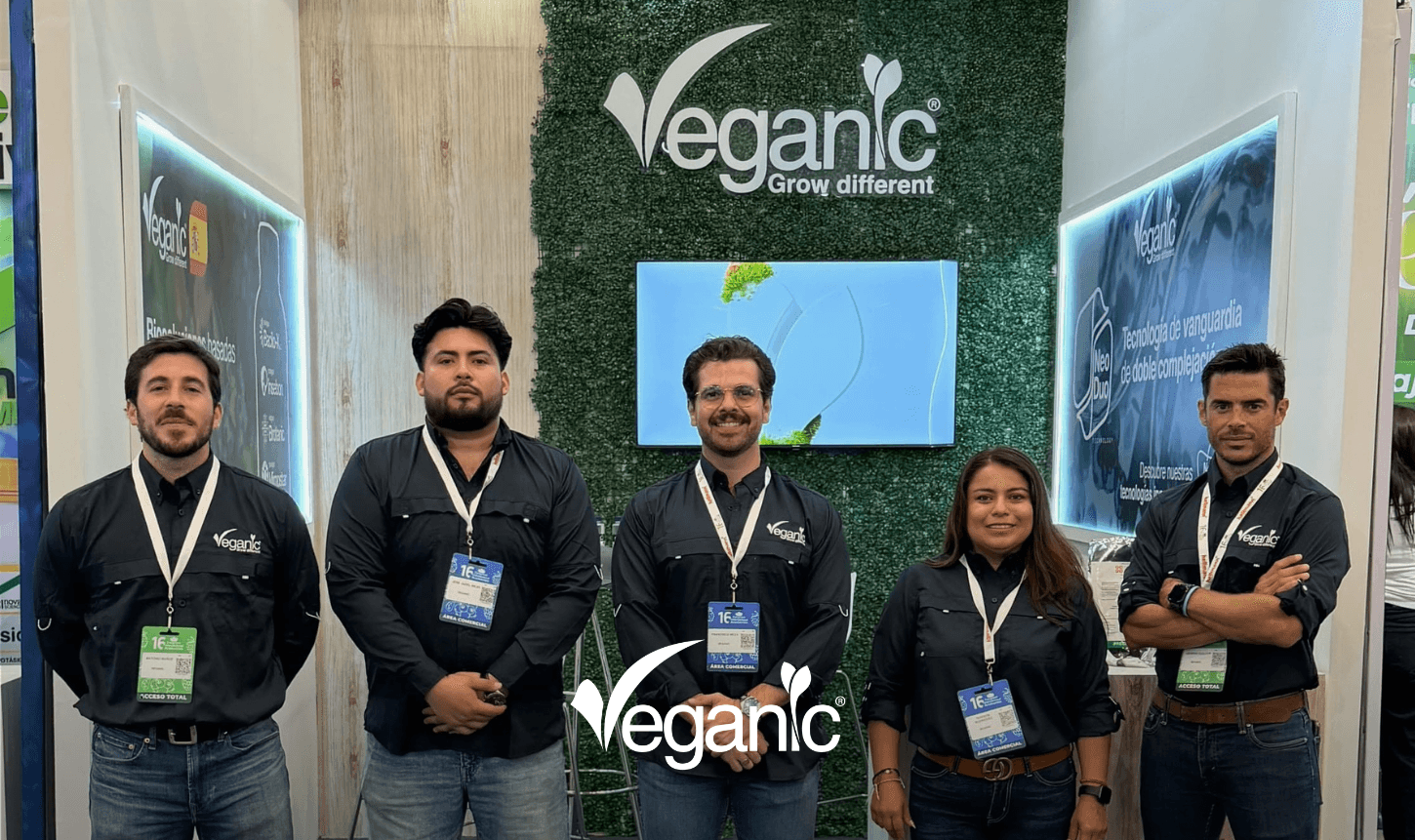
At Veganic, we understand that biofungicides based on Bacillus and Trichoderma are already part of a new way of farming — more balanced and sustainable. That is why we work on the development of our own microbiological solutions that strengthen crop protection against fungal pathogens, integrating effectively into biological control strategies. We are committed to going one step further, combining scientific knowledge, technological development and field experience to offer tools that respond to the real challenges faced by growers.
The role of agricultural microbiology in the future of biological control
The use of beneficial microorganisms in agriculture will continue to grow in the coming years as farming advances towards more sustainable models. Advances in agricultural biotechnology, soil microbiology, plant biology and molecular biology are enabling a better understanding of the complex interactions between plants and microorganisms.
This knowledge opens up new opportunities to develop biological solutions capable of protecting crops against diseases without compromising the sustainability of the agricultural system. In this context, Bacillus and Trichoderma represent only a part of the enormous potential of agricultural microbiology applied to biological control.